
Foundation repair in Birmingham runs $4,000–$15,000 for most full repairs, piers $1,200–$3,000 each, drainage $1,500–$6,000. On ridge-and-valley terrain a level pad is cut on one side and filled on the other, so movement runs downhill. Ask whether the survey carries a charge when the specialist calls.
Why the movement here has a direction, what the pier log should say, and the four questions that separate four bids.
Level ground on a ridge is manufactured
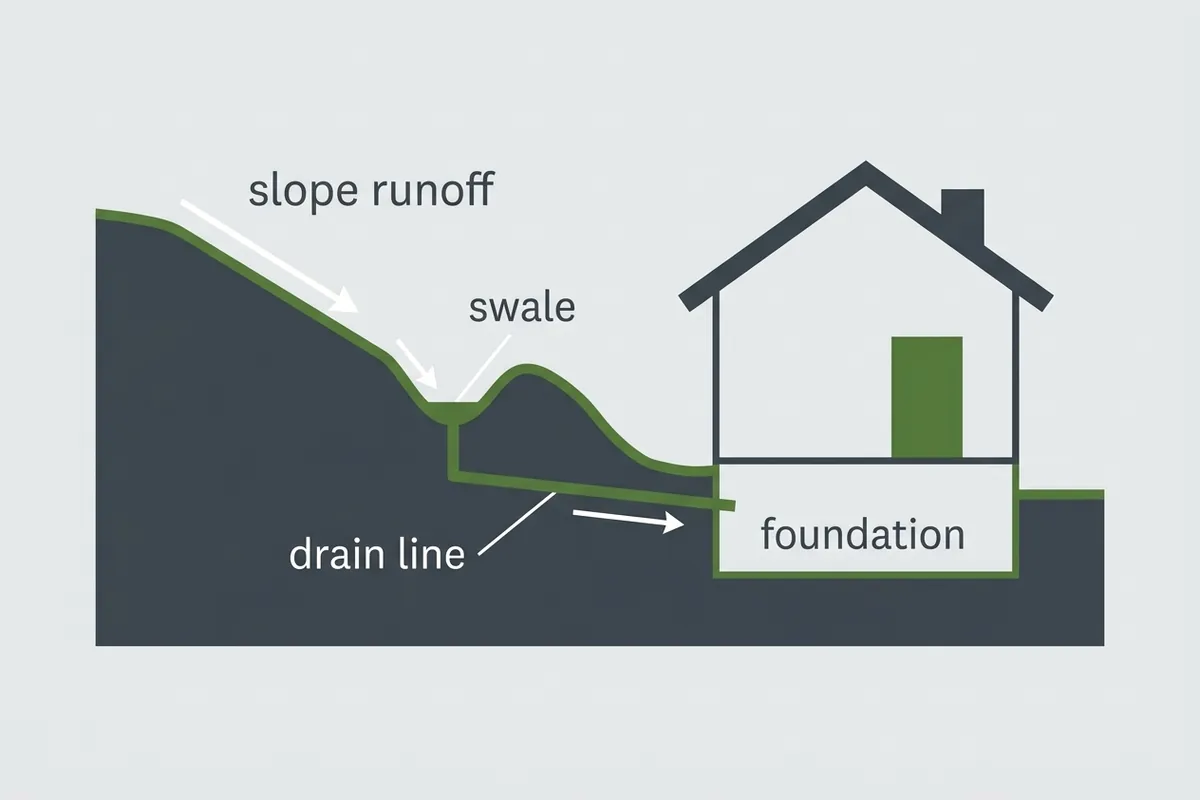
Birmingham sits in ridge-and-valley country, and the communities that climb Red Mountain and Shades Mountain are on real grade. A house needs a level pad, and on a slope that pad gets created: the machine cuts into the hillside on the uphill side and places the excavated material downhill to build the low side up.
So a single foundation routinely spans two completely different grounds. Uphill it bears on material that has been settling since long before anyone lived here. Downhill it bears on soil that was moved into position during construction. However well that fill was compacted, it is younger, looser, and still consolidating under building load in a way the cut side simply is not.
Which is why it always goes the same way
This is the useful part. Most soil markets produce movement you have to guess at. A benched pad produces movement with a direction — consistently toward the low side of the lot, consistently over the filled half, and usually appearing in a house’s first decade rather than its fourth.
When floor elevations come back flat across the uphill portion and falling steadily across the downhill portion, nobody is inferring a cause. The readings show the construction history of your floor. They show where piers belong, how many, and just as usefully where they would be wasted — because piering the half that was never going to move is a real thing homeowners here pay for.
Red clay adds the second layer
Iron-rich red clay expands as it takes on water and contracts through warm dry stretches, and at 56.6 inches of annual precipitation — more than Huntsville or Montgomery — it gets plenty of opportunity to do both. Hold on to the distinction: clay movement reverses, and fill consolidation does not. Most local houses have both happening at once, and separating them takes elevation readings rather than an opinion about a crack.
What the fix usually is
| What the house is doing | What it usually means | The work | Typical range |
|---|---|---|---|
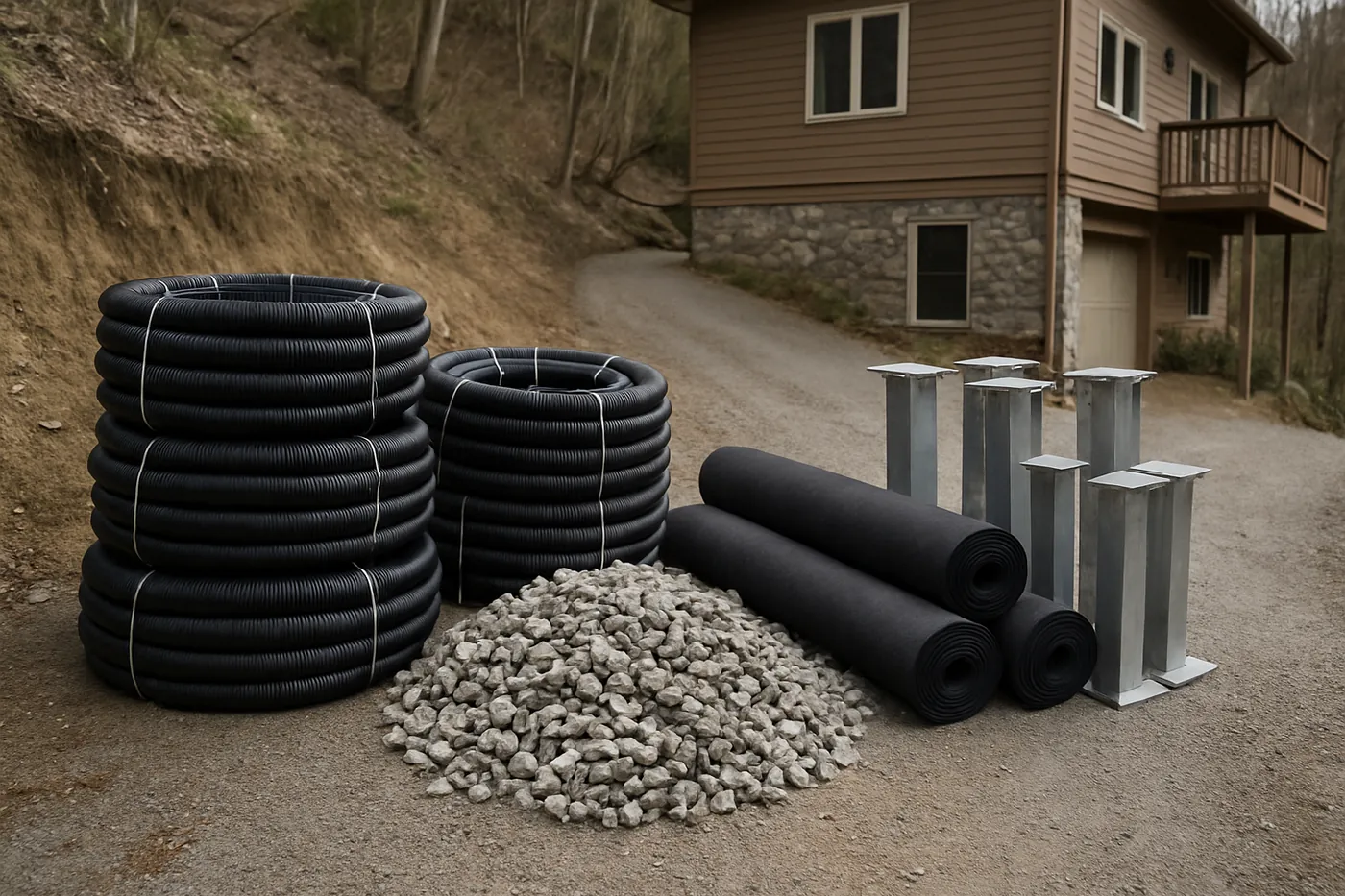
| Floors falling toward the downhill side | Fill consolidating under that half | Piering the filled portion | $4,000–$15,000 |
| Cracks that open dry and close wet | Red clay cycling with moisture | Even out the water, monitor | $1,500–$6,000 |
| The same slab crack reopening | A cut-and-fill line beneath it | Support, then repair | $3,500–$12,000 |
| Horizontal crack in a foundation wall | Lateral pressure from saturated backfill | Assess promptly | $400–$1,500 |
| A retaining wall leaning | Often the same fill, held by something failing | Wall work, priced separately | Quoted on site |
| Driveway sunk along one edge | Flatwork noticed the fill before the house did | Lift it, and check inside | $500–$2,500 |
The Birmingham cost guide takes every one of those bands apart and explains what pushes a house toward either end — the small jobs included, the ones where the entire recommendation runs to a few hundred dollars of guttering.
The pier log matters more than the pier count
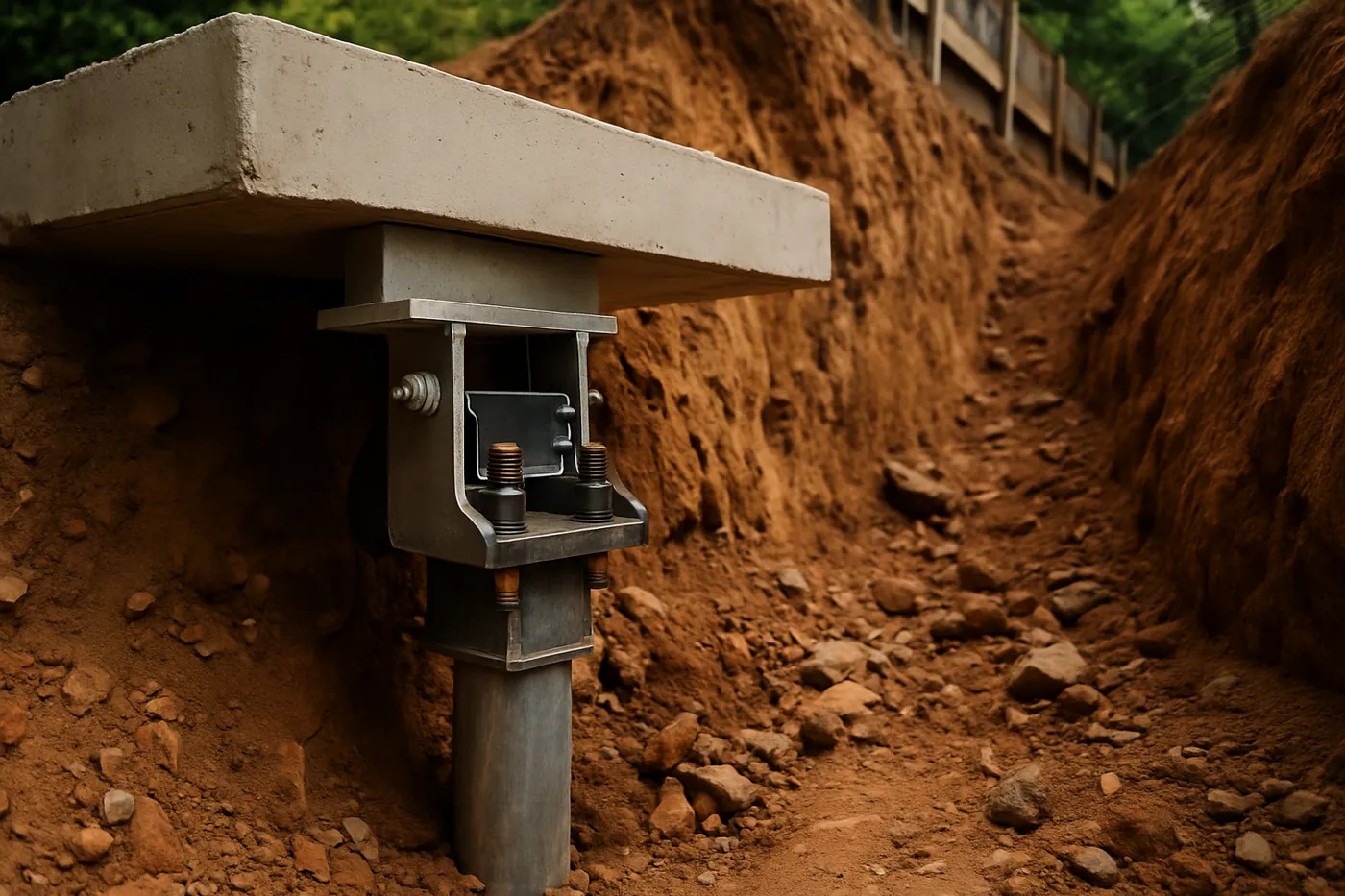
Homeowners compare bids on how many piers. The more revealing number is what each pier landed on. An industrial metro carries a great deal of made ground — material placed across a century of building and rebuilding — and a pier that stopped in dense fill feels exactly like a pier that reached undisturbed material, right up until it does not.
Ask every company three things: what depth the price assumes, the per-foot rate if the drive goes deeper, and whether you receive a per-pier log recording depth and termination material. A company that records those is telling you it expects to be checked.
Four bids, four questions
Every national foundation brand competes in this metro. That is good for you — you will get multiple bids without trying. The difficulty is comparing them, because the differences hide in the warranty rather than in the price. So ask all four companies:
- Did the pier count come from an elevation contour? If not, it came from where cracks were visible, which is a different thing.
- What depth does the price assume, and what is the overage rate? A bid with neither has not committed to anything.
- Are piers load tested, and will I get the log? On made ground this is the whole question.
- What does the warranty cover, does it transfer, who backs it, and what voids it? Most cover the piered section holding its design load — not the house.
Read every proposal’s warranty clause by clause before you sign, and ask whoever wrote it to explain any clause that is unclear. The cost guide covers all four in detail.
What we won’t recommend
- Piering the uphill half. Unless the readings actually show it moved, that is support installed on ground that was never going to settle.
- A pier count with no elevation numbers behind it. That is a price, not a design.
- A bid with no depth assumption. On a filled pad, depth is the variable that decides whether the repair holds.
- Sealing a crack that is still moving. It buys a neat line that reopens along the same path.
- Structural work while water still concentrates at the wall. Especially on the slope lots in Irondale and Center Point.
Three questions get their own pages: how a survey separates fill consolidation from clay cycling, why torque readings are worth paying for on ground nobody documented, and what insurance and a builder warranty each cover when the exclusion catches almost everything.
Foundation questions Birmingham homeowners ask
How much does foundation repair cost in Birmingham?
Most full repairs run $4,000 to $15,000, with piers at $1,200 to $3,000 each. Slab work runs $3,500 to $12,000, drainage correction $1,500 to $6,000, and crack repair $400 to $1,500. The floor elevation survey decides which one you need; many local specialists don't charge for it, so ask when they call.
Why do Birmingham foundations move?
Mostly because of how the ground was built rather than what it is made of. On ridge-and-valley terrain a level pad is cut into the slope on one side and filled on the other, so the filled half consolidates for years while the cut half does not. Red clay responding to 56.6 inches of annual rain adds a seasonal layer on top.
Why does my house only crack on one side?
Because that side is probably over the fill. A benched pad produces movement with a direction - consistently toward the low side of the lot, consistently over the filled portion, and typically in the first decade. That pattern is the single most diagnostic thing about this market.
Do I actually need piers?
Often no, and a good specialist will say so. Plenty of houses here want their water sorted out rather than steel put under them. On top of that, supporting the cut half of a benched lot is money going into ground with no intention of settling. The contour identifies which half is actually in play.
I have three bids. How do I compare them?
On four things, none of which is the headline price: whether the pier count came from an elevation contour, whether the bid states a depth assumption and an overage rate, whether piers get load tested and logged, and what the warranty actually covers. Read each bid side by side on those four points before you sign.
Will insurance cover it?
Rarely. Alabama policies exclude earth movement, which captures both fill consolidation and clay movement. The exception is a sudden accidental plumbing discharge. On a newer home the builder warranty is usually the better route, and grading and drainage are commonly covered items.
Foundation repair across Jefferson and Shelby counties
HooverVestavia HillsHomewoodTrussvilleBessemerIrondaleCenter PointMountain BrookHelena all service areas
Get a Birmingham foundation evaluation
Describe what the house is doing — a crack that keeps opening, a door that stopped latching, floors that fall away toward one side, a retaining wall starting to lean. If you already hold a bid from somebody else, keep it handy and read its warranty before you sign anything. A local specialist serving Birmingham calls you back.