
Foundation crack repair in Birmingham costs $400–$1,500 where the structure is stable. The diagnostic question here is direction: cracks over the filled half of a hillside pad widen consistently toward the low side, while red clay cracks open and close with the seasons.
How to read a crack over a few weeks, which patterns are urgent, and when sealing is the wrong first move.
Measure it first, seal it second
Every crack is carrying information, and injection destroys it. So before anybody brings a gun to the wall: pencil a dated tick at each end, note the width next to it, take a photograph. Do that again in a month, and again the month after. Three data points beat any one-off inspection at telling you what is actually happening.
The question those readings answer is whether the thing breathes. Wider in late summer, tighter by spring, means the red clay is running its moisture cycle and you are having a maintenance conversation. Wider every single time you check, particularly with one face pushed proud of the other, means ground that is still compressing and will not be returning.
The patterns that matter here
- Stair-step cracking that widens toward the downhill side — the classic benched-pad signature. The wide end is over the fill.
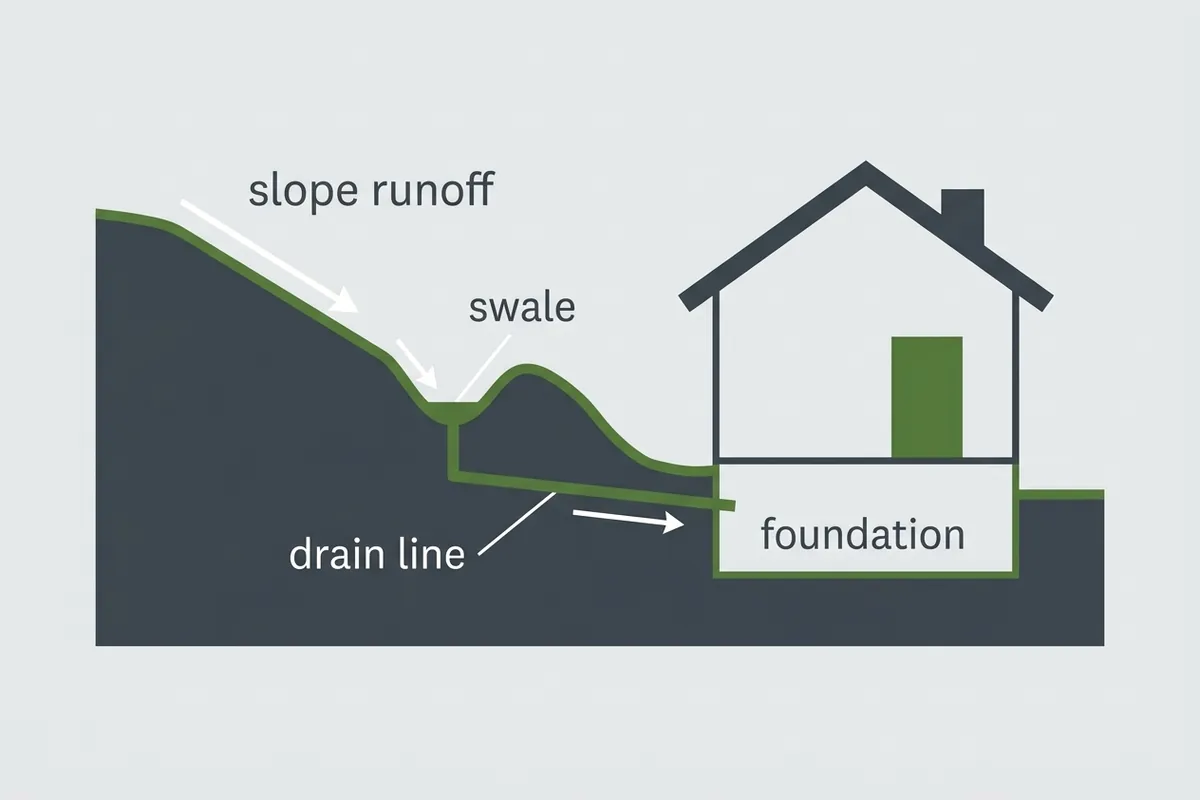
- Horizontal crack in a foundation wall — lateral pressure, often saturated backfill on a sloped lot. Treat as urgent.
- Diagonal cracks from window and door corners — the opening is racking because the footing under it moved.
- Vertical, tight, no displacement — usually shrinkage. Seal for water, monitor for change.
- A crack that reopens in the same line after repair — something underneath is still moving. Stop refilling it.
Repair methods and what each is for
| Approach | Cost | Appropriate where |
|---|---|---|
| Epoxy | $400–$900 each | Poured concrete, structural, and the movement has demonstrably stopped |
| Polyurethane | $400–$1,000 each | Water is getting through and a little more movement is likely |
| Carbon fibre | $600–$1,500 per strap | Modest bowing that wants holding rather than straightening |
| Surface sealant | $150–$400 | Fine shrinkage lines, faces still flush |
| Deal with the ground | See piering | The contour says the building is off level |
Times when this is the wrong thing to buy
Where a survey returns an inch and a half of fall across one room, nobody has a crack problem — they have a support problem with a visible symptom, and somebody is quoting the symptom. Injected resin will hold through this season and part at the same line during the next. That is the reason elevations belong on every crack call, and when those numbers come back level, the crack is cosmetic and should be priced as cosmetic.
Everything is priced in the cost guide, including the visits that end with a recommendation to watch it for another season.
Cracks, answered plainly
What does foundation crack repair cost in Birmingham?
Where nothing else is moving, injection or sealing lands at $400-$1,500. That figure rests on an assumption - that the crack is all there is. Should the contour come back showing the building off level, filling the crack is cosmetic work performed on a structural problem, and the honest number sits with piering instead.
Which direction a crack opens - does that matter?
It is one of the more useful things you can observe. A crack that is wider at the top is usually rotating away as one side drops. A crack wider at the bottom points at a different movement entirely. On a hillside pad the widening side very often faces downhill, which is the pad telling you which half is settling.
Is a horizontal crack in a basement wall serious?
Treat it as urgent. Horizontal cracking indicates lateral pressure against the wall rather than settlement beneath it - typically saturated backfill pushing inward, which on a sloped lot taking runoff is a live risk. That is a different repair from piering and it should be looked at promptly.
How do I tell seasonal cracks from structural ones?
Time and a pencil. Mark both ends with a dated line and note the width monthly. Red clay movement breathes - wider through a dry stretch, narrower after a wet one. Consolidation over fill moves one direction only. Three months of measurements settles a question no single visit can.
Should I seal a crack myself?
Where there is no offset between the faces and nothing has changed in months, sealing it yourself is sensible work that keeps water out. What to avoid is filling something nobody has tracked, since the pencil marks are the only history the wall has. Two months of measurements first.
Get a Birmingham foundation evaluation
Describe what the house is doing — a crack that keeps opening, a door that stopped latching, floors that fall away toward one side, a retaining wall starting to lean. If you already hold a bid from somebody else, keep it handy and read its warranty before you sign anything. A local specialist serving Birmingham calls you back.