
Helical piers in Birmingham cost $1,400–$3,200 each installed, with most projects landing at $4,000–$15,000. They are turned in to a measured torque, and because torque relates to capacity, each pier reports the material it is advancing through — useful on undocumented fill.
How the torque relationship works, how it can be misread, and when helicals beat driven piers here.
Something you can write down
Picture a steel shaft with screw-like plates on it, driven down by a hydraulic head that rotates rather than hammers. How hard it resists that rotation — the installation torque — tracks against ultimate capacity through a relationship the industry has documented and relies on. The upshot is that every single pier hands you a figure describing whatever it is currently passing through.
On uniform natural ground that number is close to a formality. On the filled half of a benched pad, where the material arrived during construction and its composition was never recorded anywhere you can consult, it is the closest thing to a soil investigation available without paying for boring logs. That is the argument for helicals in this specific market.
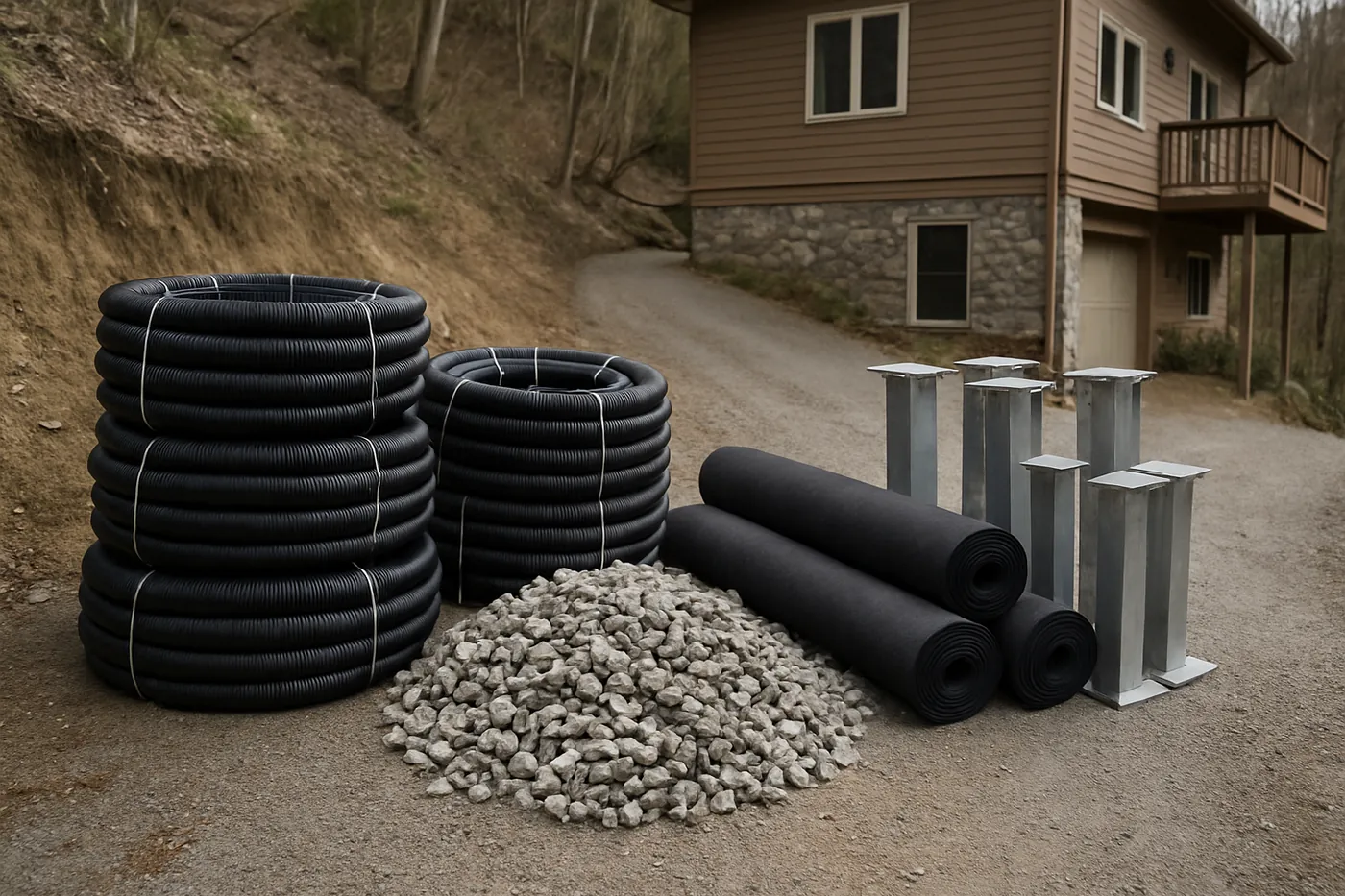
Where a torque reading can mislead
Torque measures resistance, and several things resist. Well-compacted fill resists. A buried chunk of construction debris resists. Neither is the same as reaching material that will carry a house indefinitely, and a spike caused by an obstruction reads much like a spike caused by competent bearing.
None of the countermeasures are exotic, and a competent installer will raise them unprompted: push on through a spike that looks wrong when the situation allows, verify with a load test instead of trusting the gauge by itself, and write down every pier separately so an oddity shows up in the record rather than vanishing into an average. Put the question directly — what do you do with a reading you distrust? The reply tells you whether they have worked graded fill before.
Helical versus driven piers
| Helical piers | Push piers | |
|---|---|---|
| Typical cost | $1,400–$3,200 each | $1,200–$3,000 each |
| How installed | Turned in to a measured torque | Driven using the structure’s weight as reaction |
| What you learn | A capacity reading at every depth | Refusal, confirmed by load test |
| Needs building weight | No | Yes |
| Best for | Undocumented fill, light framing, porches, additions, new construction | Heavier brick and masonry homes |
| Shared risk here | Both can stop on something that is not competent bearing — which is why the log records termination, not just depth | |
The question worth asking is not which product a company sells but how it verifies what the pier landed on. The piering overview covers what belongs in either bid.
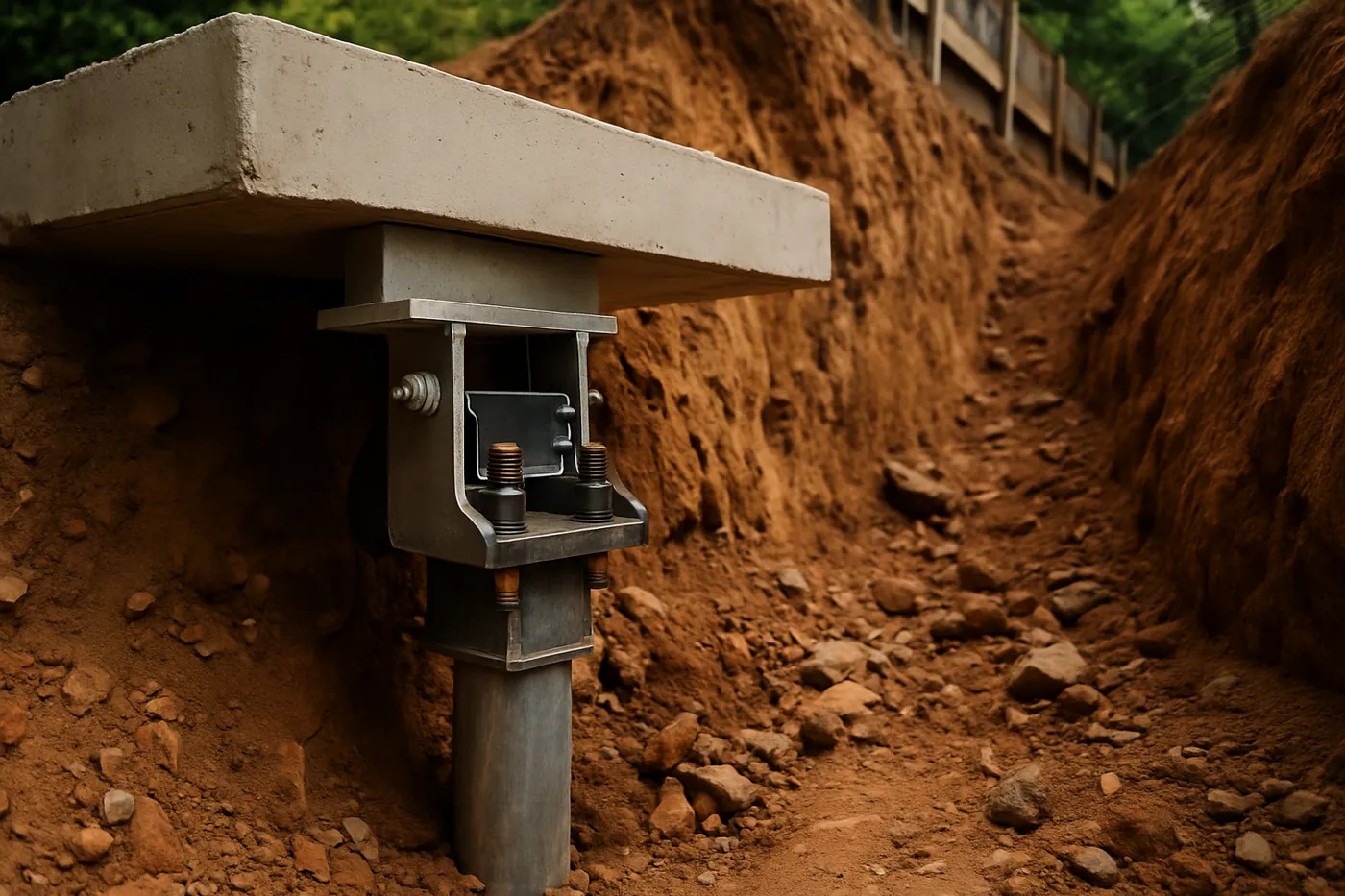
Installing before the house exists
Because helicals do not require structural weight, they can be installed during construction. On a hillside lot with significant fill on the downhill half, that is a genuinely good purchase: supporting footings over questionable ground at build time costs a fraction of retrofitting the same support after the brick has cracked. If a soils report flagged variable bearing on your lot, that conversation belongs before the pour rather than after.
What installation looks like
Compact equipment works along the affected footing, which matters on the tighter lots common in older Homewood and Crestwood-era neighborhoods. Brackets tie each pier to the footing, load transfers, and lift is taken in controlled increments where lift rather than stabilization is the goal. Most projects run two to five days, and every price sits in the cost guide.
Helicals, answered plainly
What do helical piers cost in Birmingham?
Helical piers generally run $1,400-$3,200 each installed, and most projects here use between six and twenty. Total cost usually lands in the $4,000-$15,000 range. On a benched pad the count follows how much of the footprint sits over fill rather than how many cracks are visible.
Why helical piers on fill?
Because they report as they go. A helical is advanced by turning it, and installation torque has a documented relationship to capacity - so every pier produces a reading describing the material it is actually passing through. On ground whose composition is not documented, that reading is worth paying for.
Can torque readings be misleading?
They can be misread. Dense fill and a buried obstruction both raise torque, and neither is the same as competent bearing. Good practice is to continue past a suspicious reading where conditions allow, load test rather than trusting torque alone, and record readings pier by pier so an anomaly is visible on paper.
Do helical piers work for new construction?
Helical piers work for new construction, and it is a sensible use on a hillside lot. Because helicals do not need structural weight to install, they can go in before a house exists - supporting footings over the filled portion of a pad at build time. That costs a fraction of retrofitting the same support after cracking appears.
How long does installation take?
Two to five days for most residential projects depending on pier count and access. Compact equipment fits between houses on tight lots, produces less spoil than excavation methods, and limits landscaping disturbance to the working area along the affected footing.
Get a Birmingham foundation evaluation
Describe what the house is doing — a crack that keeps opening, a door that stopped latching, floors that fall away toward one side, a retaining wall starting to lean. If you already hold a bid from somebody else, keep it handy and read its warranty before you sign anything. A local specialist serving Birmingham calls you back.